All Blogs

How to Choose an AI Vendor for Government: A Security and Compliance Checklist
An AI vendor for government is a supplier whose system can clear security authorization, whose contract protects agency data and exit rights, and whose delivery record can be independently verified. Evaluate vendors on evidence weight rather than demo quality. The strongest evidence is a contactable production reference in a comparable regulated environment.

AI Solutions for the Public Sector: Deploying Secure, Compliant, Auditable AI
AI solutions for the public sector are AI systems deployed inside an authorized security boundary, with documented data handling, complete audit logging, and contract terms that protect agency data and exit rights. In US government the binding constraint is not model quality. It is whether the system can clear security authorization and procurement review before it goes live.

AI Records Management for Government Agencies: Clearing Backlogs and Speeding Retrieval
AI records management in government uses machine learning to classify, extract, index, and dispose of agency records automatically. It clears paper backlogs and cuts retrieval from days to seconds.
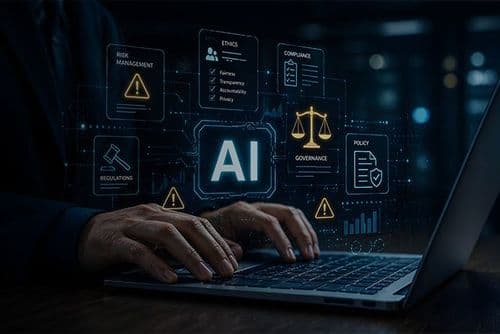
Responsible AI in Government: Building Governance, Ethics, and Compliance That Hold
Responsible AI in government is the practice of deploying artificial intelligence in public agencies with documented risk assessment, human oversight, and public accountability. In the United States it is enforced through OMB Memorandum M-25-21 at the federal level and a growing set of state statutes. Governance only works where it attaches to a decision someone can refuse.

AI in the Public Sector: A Guide to Where AI Delivers Value
AI in the public sector is the use of artificial intelligence by government and public-service organizations to serve constituents, process documents, detect fraud, run operations, and inform decisions. Its value is easiest to locate not by agency mission but by function: five shared activities constituent services, document processing, program integrity, operations, and decision support where AI pays off in almost any agency.

AI in Government: How the US Public Sector Is Adopting AI in 2026
AI in government is the use of artificial intelligence machine learning, generative AI, and automation by public-sector agencies to deliver services, process documents, detect fraud, and modernize aging systems.

AI Solutions for Banking: Use Cases, ROI, and Choosing a Compliant Partner
AI solutions for banking are software systems that automate fraud detection, anti-money-laundering (AML) and KYC compliance, credit risk, document processing, and customer service. They cut cost and risk while speeding decisions.

AI Document Processing in Banking: How to Automate Loan and Mortgage Paperwork
AI document processing in banking uses intelligent document processing (IDP) a mix of optical character recognition (OCR), machine learning, and natural language processing to automatically read, classify, and extract data from loan and mortgage paperwork.

AI KYC Compliance: How to Automate KYC and AML Without the Cost and Risk
AI KYC compliance uses artificial intelligence to automate identity verification, sanctions screening, and anti-money-laundering (AML) monitoring.

AI Fraud Detection in Banking: How It Works and Why It Matters in 2026
AI fraud detection in banking uses machine learning to spot fraudulent transactions in real time by learning each customer's normal behavior and flagging deviations in milliseconds.

AI in Financial Services: Where It Fits and What It Delivers in 2026
AI in financial services is the use of machine learning, generative AI, and automation across banking, insurance, wealth management, capital markets, and payments to cut costs, manage risk, and grow revenue.

AI in Banking: The 7 Trends Redefining US Financial Services in 2026
AI in banking is the use of machine learning, generative AI, and automation to detect fraud, speed lending decisions, personalize service, and cut operating costs.

AI Solutions for Business: What Works, Where, and What ROI to Expect
AI solutions for business are software systems that use machine learning, generative AI, and automation to cut costs, speed decisions, and unlock new revenue across functions like finance, operations, and customer service.

The Role of Zero Trust Architecture in Protecting Modern Enterprises
Modern enterprises no longer work from one fixed office. Teams use cloud apps, remote devices, mobile tools, and third-party platforms every day.

Top 10 Cybersecurity Threats Businesses Must Prepare for in 2026
Cybersecurity is no longer only an IT issue. It is now a business survival issue. In 2026, companies depend on cloud apps, remote teams, digital payments, customer data, and connected systems. As a result, one weak point can affect the whole business.
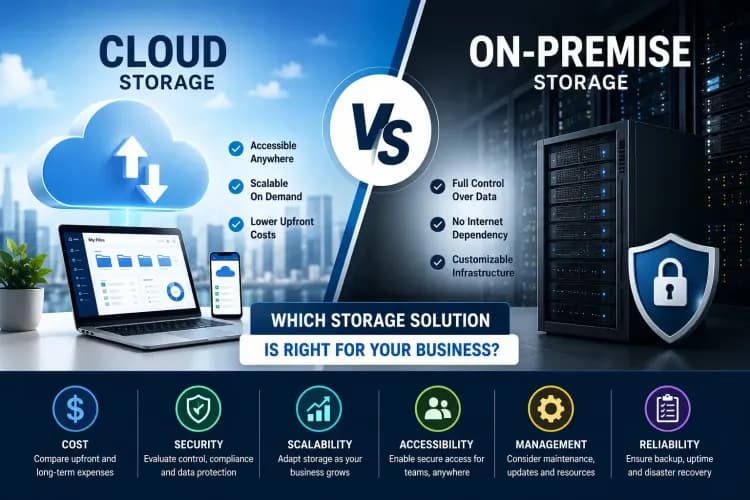
Cloud vs. On-Premise: Which Storage Solution Is Right for Your Business?
Every business depends on data. Companies store contracts, financial files, employee records, customer details, images, reports, and internal documents every day.

How to Choose the Right Cloud Storage Provider: A Guide for SMEs
Small and medium-sized businesses manage more digital files every year. They store contracts, invoices, customer records, reports, designs, and internal documents.

The Top 5 Benefits of Switching to Cloud Storage Services in 2026
Businesses create and manage more data than ever before. They store documents, contracts, invoices, videos, customer records, and internal files every day.
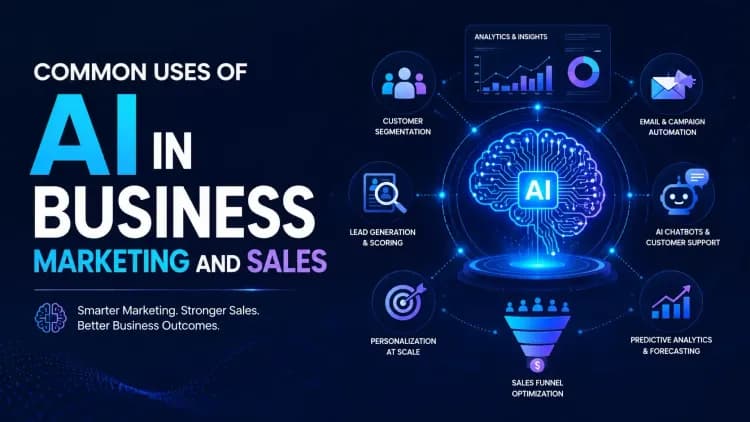
Common Uses of AI in Business Marketing and Sales
Marketing and sales teams manage a lot of information every day. They track customer behavior, create campaigns, follow up with leads, and review performance reports. These tasks take time. They also require quick decisions.
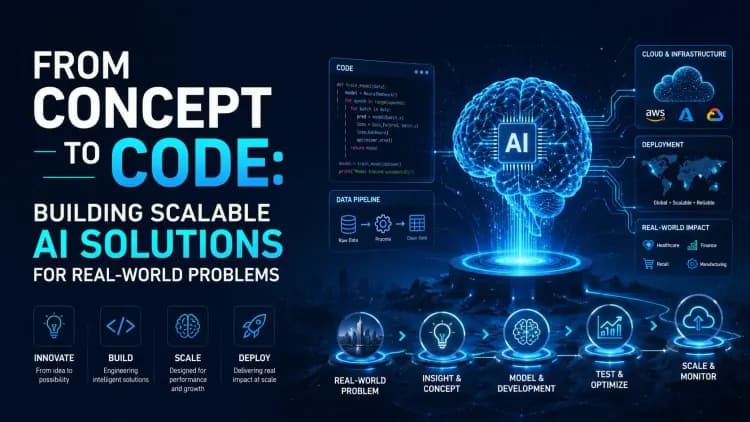
From Concept to Code: Building Scalable AI Solutions for Real-World Problems
Strong AI projects start with a real problem. They do not start with a trend. A business may need faster customer support. It may need better demand forecasts. It may also need to reduce repetitive work.
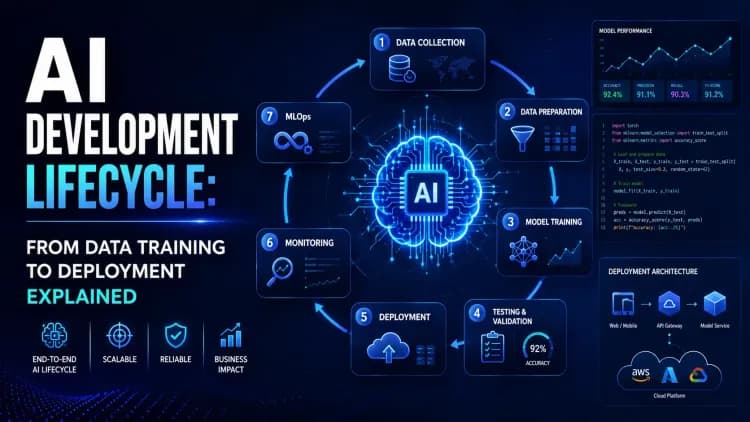
AI Development Lifecycle: From Data Training to Deployment Explained
AI development does not begin and end with code. It follows a complete process. Teams first identify a business problem. Then, they collect data, train a model, test results, and deploy the solution. Each step affects the quality of the final product.
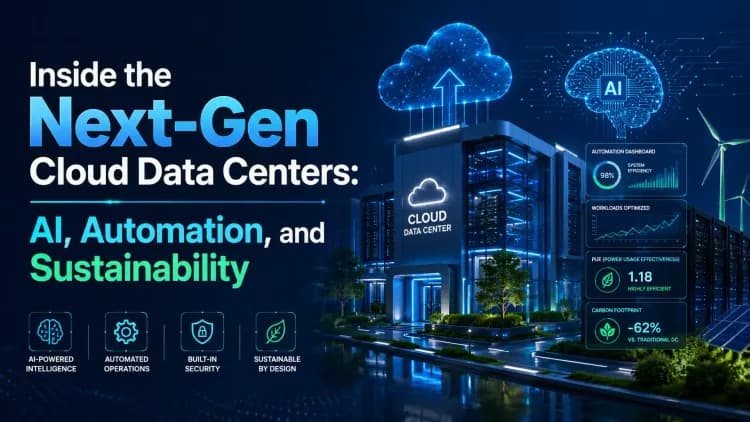
Inside the Next-Gen Cloud Data Centers: AI, Automation, and Sustainability
Cloud data centers support the digital services people use every day. They power websites, business apps, streaming platforms, online payments, and remote work tools. As digital demand grows, these facilities must process more data at faster speeds. They also need to remain reliable at all times.

Cyber Security in the AI Era: Protecting Data Against Intelligent Threats
Businesses now depend on digital systems for almost everything. They store customer records online. They run teams through cloud platforms. They use apps, APIs, and connected devices every day. This makes work faster, but it also creates more ways for attackers to enter.
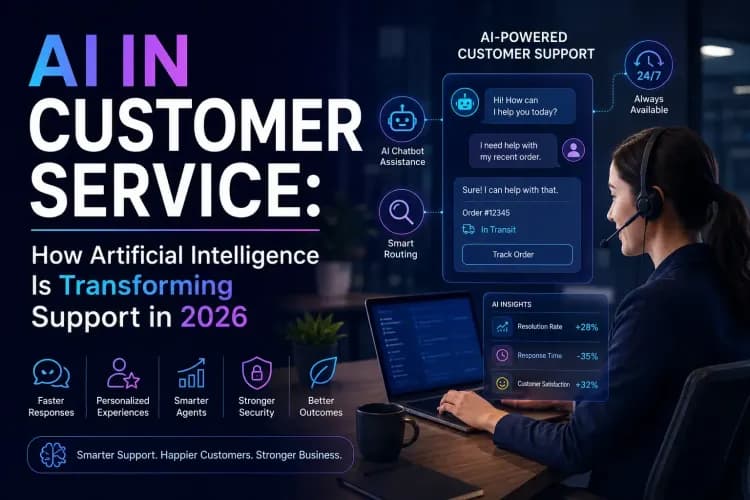
AI in Customer Service: How Artificial Intelligence Is Transforming Support in 2026
Customer service has changed quickly. Customers now expect fast replies across chat, email, social media, and mobile apps. AI helps support teams manage these expectations without making service feel distant. It can answer common questions, find useful details, and guide customers to the right next step.
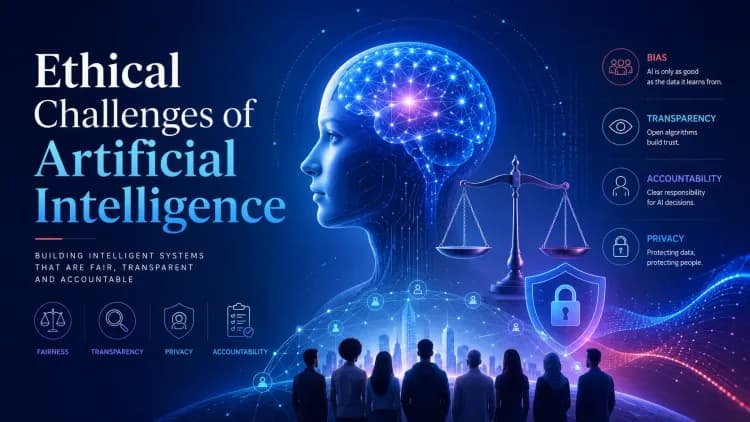
Ethical Challenges of Artificial Intelligence
Artificial intelligence is shaping the way we live, work, and interact with technology. From personalized recommendations to automated decision-making, AI systems influence everyday choices in subtle yet powerful ways. While these advancements bring efficiency and innovation, they also raise serious ethical questions. As AI becomes more deeply embedded in society, understanding its ethical challenges is no longer optional—it is essential.

The Growing Need for Cyber Security in the Age of AI and Cloud Computing
Businesses now depend on digital tools for almost every task. They store customer information online. They manage teams through cloud platforms. They also use AI to improve operations and customer experiences. This digital growth creates new opportunities. However, it also creates more entry points for cyber threats.
How AI Development Is Powering the Next Generation of Intelligent Software
Traditional software follows fixed rules. It completes tasks based on clear instructions. Intelligent software goes further. It can learn from data, detect patterns, and improve its responses over time. This helps systems become more useful as businesses grow.

Green Data Centers: How Sustainability Is Shaping the Future of IT Infrastructure
The digital world runs on data. Every online search, payment, video stream, and cloud application depends on data centers. As a result, demand for computing power keeps increasing. Businesses now store more customer data than ever before. They also rely on real-time systems to deliver faster services.
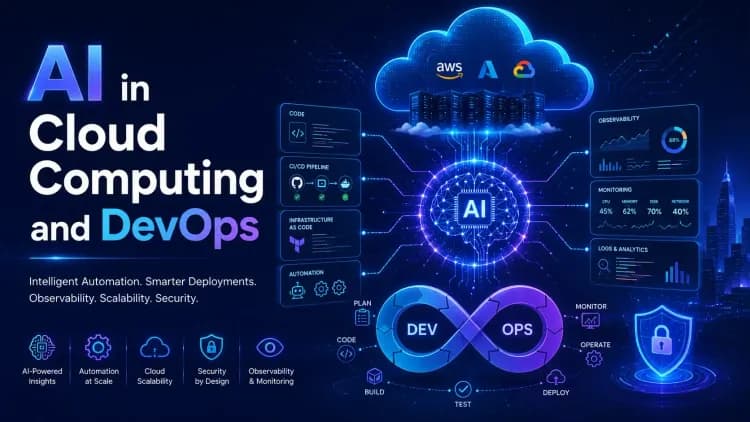
AI in Cloud Computing and DevOps
Cloud computing and DevOps have transformed how modern software is built, deployed, and managed. Businesses today demand faster releases, higher reliability, and scalable infrastructure, all while keeping costs under control. However, as cloud environments grow more complex, managing them efficiently becomes increasingly challenging. This is where artificial intelligence is making a powerful impact.
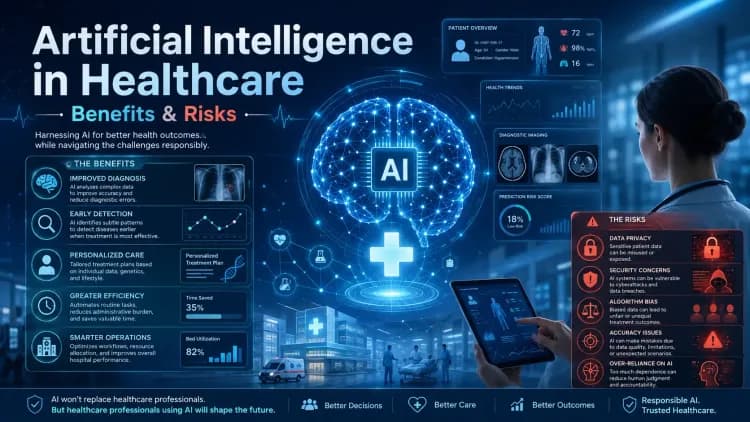
Artificial Intelligence in Healthcare: Benefits & Risks
Artificial intelligence is transforming healthcare at a pace few industries have ever experienced. From early disease detection to personalized treatment plans, AI is helping healthcare providers deliver faster, more accurate, and more efficient care. At the same time, this rapid adoption raises important questions about safety, ethics, and trust. Understanding both the benefits and risks of AI in healthcare is essential for patients, providers, and organizations alike.
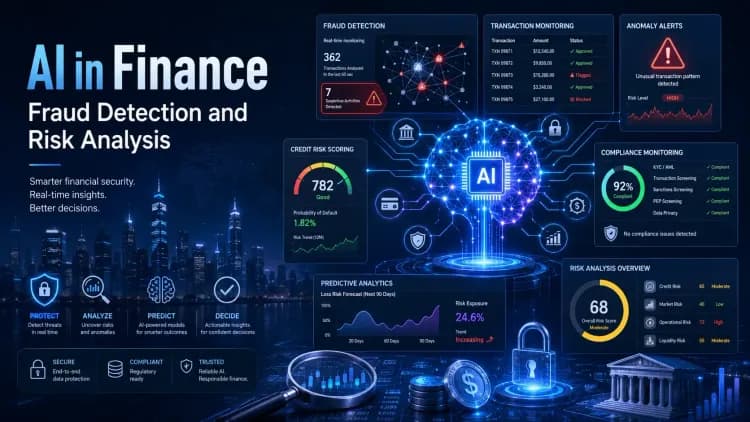
AI in Finance: Fraud Detection and Risk Analysis
The financial industry has always been built on trust, accuracy, and speed. However, as digital transactions increase and financial systems become more complex, fraud and risk management challenges continue to grow. Traditional methods struggle to keep up with the sheer volume of transactions and the sophistication of modern cybercriminals. As a result, financial institutions are turning to artificial intelligence to strengthen security and improve decision-making.

AI tools every startup should use
Startups operate in an environment where speed, efficiency, and smart decision-making can make or break success. Founders often juggle multiple roles, manage limited budgets, and compete with well-established players. In such a landscape, artificial intelligence has emerged as a powerful ally. AI tools help startups automate tasks, gain insights, and scale faster without burning resources.

How AI automates repetitive business tasks
In today's fast-paced digital economy, businesses are under constant pressure to do more with less. Repetitive tasks consume valuable time, drain employee energy, and often lead to human error. As a result, organisations across industries are actively seeking smarter ways to streamline operations without compromising quality. This is where artificial intelligence steps in as a true game-changer.

AI vs machine learning: what's the difference?
Artificial intelligence has become one of the most talked-about technologies of the modern era. From smart assistants to recommendation engines, it seems like AI is everywhere. At the same time, machine learning is often mentioned alongside AI, sometimes as if the two are interchangeable. However, while they are closely related, they are not the same thing. Understanding the difference between AI and machine learning is essential for businesses, professionals, and decision-makers who want to invest wisely in digital transformation.